



A while back I was vetting a potential guest for No Way Out and couldn’t find basic information on them. The military background was thin. My Spidey senses went up. I kept searching, and I just couldn’t find anything that validated their claims.
This person had been on massive podcasts.
So this week got my attention.
Shawn Ryan recorded an episode with Leah Files, who he introduced on air as “an economist, financial analyst, and corporate intelligence consultant,” and then he chose not to release it. On October 18 she went public on X. The next evening Ryan posted the full interview with a written statement: “I chose not to release your episode because I personally had serious concerns about the truthfulness of your statements.” He said he posted it “so everyone can watch and draw their own conclusions.”

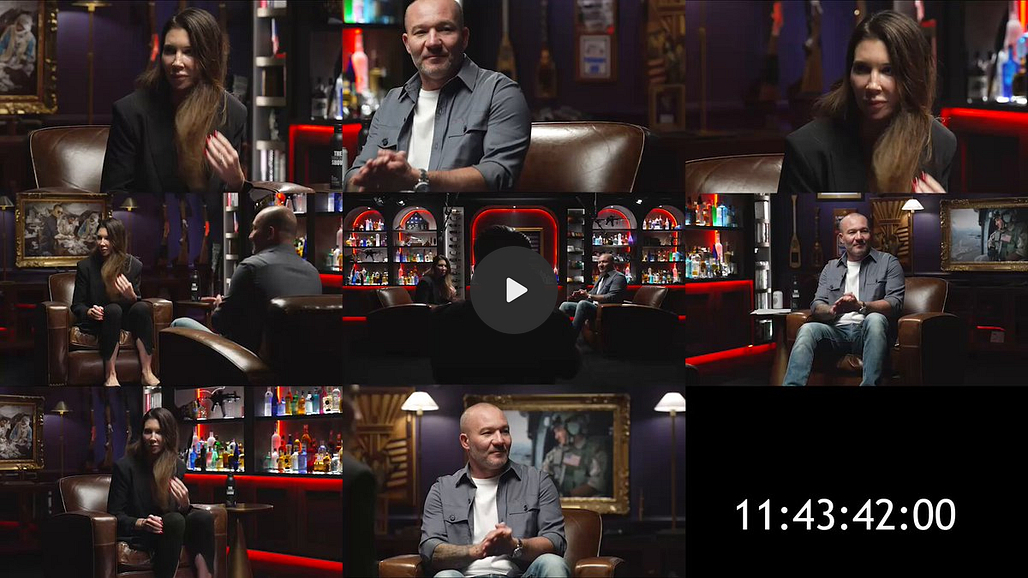
Files disputes his account. In a video he posted on October 19, Ryan said she “spent way too much time talking about the polygraph.” The day before, she had written, “I never discussed a polygraph with Shawn Ryan, and it was never why I went on.” She also wrote that right before filming she “was told I couldn’t name names,” and that she was told “not to say Andreessen Horowitz or Peter Thiel.” On his investments, Ryan wrote, “I’ve intentionally made them public.”


Her post makes other claims too. Those are her allegations, and I haven’t verified them.
Weeks earlier, on Diary of a CEO, Ryan talked about an unnamed guest whose episode he said “we’ll never release.” He put his standard plainly: “I don’t want to knowingly put things that are bullshit out there.”
I wasn’t in the room. I can’t tell you who’s right. Vetting guests is hard, and I respect a host who says out loud that he holds a line.
Your Gut is Contextual
In the military you figure out quickly who’s from your world. Kent Clizbe described it on #187: “you sniff butts and go, Yeah, no, no, you ain’t from around here, man.” I told him we said the same thing in aviation.
Kent was a CIA case officer in the 1990s and a contractor after 9/11, and a lot of that work came down to deciding whether to trust a source. He summed it up for me in four words: “your gut is contextual.” His example was somebody who grew up on the streets of Brooklyn, put on a trail in the Rocky Mountains of Colorado. “Your gut has no idea that there’s a cougar following you down that trail,” Kent said. “Your gut is looking for the crack dealer on the next corner.”
Sit Down and Talk to Him
Kent told me why he stopped trusting the machines. He said the East German assets the agency had “supposedly recruited in the 50s and 60s” all passed body-measurement deception detection, and “every single one” turned out to be a double. The same happened with Cuban agents in the 60s, he said. He didn’t know that history while he was working, “but I knew this ain’t working.”
Nothing he could hook a source up to would tell him “that when he said yes, the actual answer is no,” Kent said. “I have to sit down and talk to him, get to know him.” His advice to me: “Stay skeptical. Trust but verify.”
Put me at a poker table and I couldn’t read anybody. Zach Elwood can. On #188 he talked me down from the idea that reading people is easy. He warned me about people “wording things in vague, ambiguous ways to try to ramp up their perception of what they did.” Chase Hughes is how I found Zach in the first place.
Buyer Beware
On #187 I told Kent, “He’s awesome by the way. He’s very articulate.” I also said Chase has “a good military background, don’t get me wrong.” So I started my due diligence, and as I said on #188, “the context of his background, I couldn’t find much on it.”
My curiosity about Chase brought me to Kent and Zach. Others had already raised inconsistencies about his military career, and when they came on the show we talked about why context matters. What moved me from “good military background” to caution was what Kent and Zach said they found. Kent told me the foundation of Chase’s claims “was military intelligence, expertise, and it’s not there.” Zach said that once he went down the rabbit hole on Chase, he “just kept finding more and more ridiculous things.” Those are their findings, in their words. Judge them yourself.
I’ll say this much: buyer beware.
Chase was a guest on the Shawn Ryan Show in November 2025, on episode 253. Since late that month, Zach has posted dozens of replies on X in threads about that appearance, many of them under the show’s own posts, pointing people to his write-up. I haven’t seen anyone connect that to this week’s fight, so I’m connecting it. If the standard is truthfulness, it has to cover the guests who sound credible too, and a military résumé is where they sound most credible.
To Be or to Do
Robert Coram tells this story in his biography of John Boyd. In 1973 Boyd gave a young officer named Ron Leopold his “To Be or to Do” speech. “Tiger, one day you will come to a fork in the road,” Boyd told him. Go one way and you make compromises, get promoted and become somebody. Go the other way and you can do something, and your work might make a difference. Then Boyd put it to him: “To be somebody or to do something.” After a line about life’s roll call, he asked, “To be or to do? Which way will you go?”
Some vets ride the background so they can BE someone. Others put their heads down and DO something. Kent said on #187 that “most veterans do not use their experience” to “hoodwink other people.” Then he added that “there’s another subset” who figured out they can take advantage of the folks who say thanks for your service.
In that episode I said, “just because somebody served in the military doesn’t make them really credible.” If you’re articulate and you served, you can sell snake oil to anybody. I’m a veteran myself, and as I told Kent, “I love the veteran community, but you gotta be careful.”
The Halo
So why does the background carry so much weight? In 1920 Edward Thorndike wrote about a “constant error” in ratings, and one of his examples was army officers rated by their superiors. The officers’ scores for physique moved with their scores for intelligence, leadership and character. Thorndike wrote, “The correlations are too high and too even.” With aviation officers, general merit even bled into the rating for “technical ability as a flyer.” He called it a halo.
This summer Gallup reported that 70% of Americans have a great deal or quite a lot of confidence in military veterans. Vets earned that trust, and anyone who looks the part can borrow it. On #188 I talked about how easy it is to sell the costume. Show up in a flight suit and people get excited. The ideas inside can still be bounded.
I’m a huge supporter of psychedelic-assisted therapy. Back in May 2024 I had Trevor Millar and Jonathan Dickinson on No Way Out #66 to talk about ibogaine and veteran healing. Trevor was also on the Shawn Ryan Show (SRS #30) in July 2022. Shawn introduced him as the guy “that was with me by my side during my journey.” Since then I’ve had Mark “Slider” Keller (#138) on his year inside Ambio, Jay Kopelman (#156), Robert Gallery (#163) and Trey Warren (#175). Count them up and it’s at least a dozen No Way Out episodes on psychedelics and ketamine. I even spoke to a Wall Street crowd about psychedelic-assisted therapies. The point behind all this is context matters.
The worst version wears the costume of helping vets. I said it to Kent on #187 as someone who backs this work: “there are evildoers that are veterans in that space.”
Set and Setting
Context cuts every way, big shows included. On #66 I asked Trevor about set and setting. “Set is internal,” he said, meaning your mindset. “Setting is the room and the external environment.” That stuck with me because of my own story. On the same episode I said, “I crawled in a bottle in my mid-20s,” and I did pull out of it.
So the room matters to me. On #188 I told Zach that Shawn Ryan, “who has a similar experience as I do going down to Mexico, has a studio full of alcohol.” I also said, “I don’t think the bottles are full, but I’m like, there’s something not working here.” I’ve been curious about those bottles. They look cool. They also contradict the context. That’s my own observation from watching his show. What you say you are and what’s on the shelf behind you either line up or they don’t.
Never meet your idols.
Interaction and Isolation
Boyd wrote, “The strategic game is one of interaction and isolation.” The line I keep rereading is on the moral side: “Morally we interact with others by avoiding mismatches between what we say we are, what we are, and the world we have to deal with ...” As I read Boyd, mismatches isolate you, and the people around you notice before you do.
Cognitive warfare works through those mismatches. A family member of mine lost more than $200,000 to a crypto scam. Not long ago I took a call from what seemed like a very articulate human being, and it turned out to be an AI. It was smooth, and it had an answer for everything. Once someone gets inside your orientation, inside your OODA loop, they can adjust your behavior, and your own trust gets turned against you.
That’s why I’m careful about who I bring on. I’ve brought on folks who seemed credible and then realized they were hiding behind AI when they wrote. I’ve refused to air those episodes. One guest I recorded with couldn’t answer questions about an article they had published the day before. Maybe they were nervous. Maybe they didn’t write it. Either way, I noticed.
Who Gets Paid for the Story
Oriane Cohen ran sources for years in deep cover. On #183 she said the work was about “making the cover extremely real, not just credible.” She also asked the question that keeps me honest: “who is they? and what about if there is no they?” Most of the time what I find is a crowd of people with different incentives, working inside systems that pay for attention.
Systems drive behavior. Zach said on #188 that if you’re not going to give the audience the exciting story, “they’ll find somebody else who will.” Being somebody often pays more than doing something. Hosts and audiences who reward the story over the context are part of the problem, and I’m in that group too.
Be’ers and Doers
Boyd’s fork shows up again the longer you serve. As you get more senior in the military and spend more time in the Pentagon, you start to tell the Be’ers from the Doers. The Be’ers are the ones who say, “Boss won’t like that view.” They’re busy building credentials so they can stay part of the military-industrial complex, and the congressional complex that comes with it. A career that plays well in the Pentagon also has to play well on Capitol Hill. The Doers are the ones who don’t get promoted, which is the price Boyd told Leopold to expect: “you may not get promoted.”
Chuck Spinney worked with Boyd in the Pentagon for more than 23 years. After Boyd died in 1997, Spinney wrote “Genghis John” for Proceedings. “For the Ghetto Colonel, life revolved around a simple choice: To be or to do?” he wrote. Boyd “could be somebody, with all the shallow accoutrements of power and small achievements ... or he could do important things and make a real contribution to society.” Spinney’s name for the world Boyd worked in was the “military-industrial-congressional complex.” He put Congress right in the name.
Every Election Season
Every election season the same fork shows up, and here we are again. In Gallup’s June poll, 9% of Americans had a great deal or quite a lot of confidence in Congress, the lowest of the 17 institutions on the list. Compare that with the 70% for veterans. When a candidate runs on a military background, the halo runs with them. Some people run to be somebody, and some run to do something. Ask Boyd’s question of anyone who wants your vote: “To be or to do?”
Being curious often gets you labeled a conspiracy theorist. You can get ridiculed just for sharing a perspective. Podcasts give the curious a platform, and we keep the discourse going by challenging each other.
Ambiguity is the environment we live in, and nobody hands you the full picture. So I challenge all assumptions, mine included, and I go looking for the context behind a story before I hand it my trust.
Context matters.
Kent Clizbe is on No Way Out #187 (watch on YouTube) and Zach Elwood is on #188 (watch on YouTube). Listen to both and make up your own mind.
There is No Way Out!
-Ponch