


Originally published in The Whirl of ReOrientation on February 21, 2025.

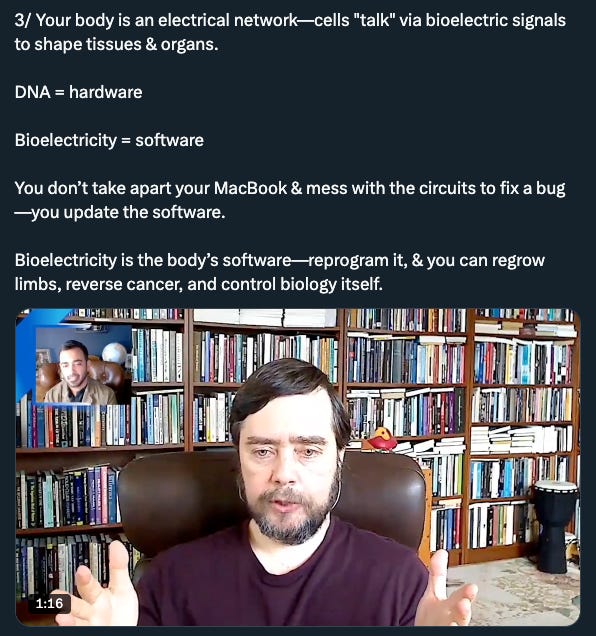
I came across a post from Michael Levin on X about cells: our bodies are electrical networks where cells use bioelectric signals to shape tissues and organs—DNA as hardware, bioelectricity as software. He challenges the notion that only the brain “thinks,” asserting that every cell, tissue, and organ solves problems and pursues goals, distinguished by how far ahead they plan. Remarkably, cells can be trained via Pavlovian conditioning, adapting to signals like a well-taught companion.
This led me to Levin’s recent collaboration with Chris Fields, “Life, its origin, and its distribution: a perspective from the Conway-Kochen Theorem and the Free Energy Principle” (Communicative & Integrative Biology, 2025). For me, what emerged was a surprising link to Mission Command, the OODA Loop, and how living systems persist through time.
Fields and Levin reimagine the origins of life (OOL) as more than a chemical event; they view it as a cognitive process rooted in agency and inference. The Conway-Kochen (CK) Theorem suggests all physical systems resist rigid predictability, implying a subtle “free will,” while the Free Energy Principle (FEP) casts them as Bayesian agents, minimizing uncertainty to persist. Many of you may be familiar with discussions—here on The Whirl, No Way Out, and other podcasts—connecting the OODA Loop to the FEP, viewing the former as an abstraction of adaptive persistence and the latter as a scientific lens validating Boyd’s sketch.
Fields and Levin propose that life unfolds along a cognitive continuum—from electrons with faint awareness to cells plotting their next steps. This resonates with Mission Command, a philosophy of centralized intent and decentralized execution. For business leaders, Mission Command offers a shift from industrial-age management to distributed leadership, empowering adaptation in complex environments. Here’s Don Vandergriff offering valuable insights on Mission Command during a Cynefin-OODA loop exploration.
Mission Command profoundly influenced John Boyd’s OODA Loop—Observe, Orient, Decide, Act—a fractal cycle abstracting how living systems, from cells to organizations, persist through time. We’ve noted how the FEP explains and validates Boyd’s iterative process, bridging biology and strategy.
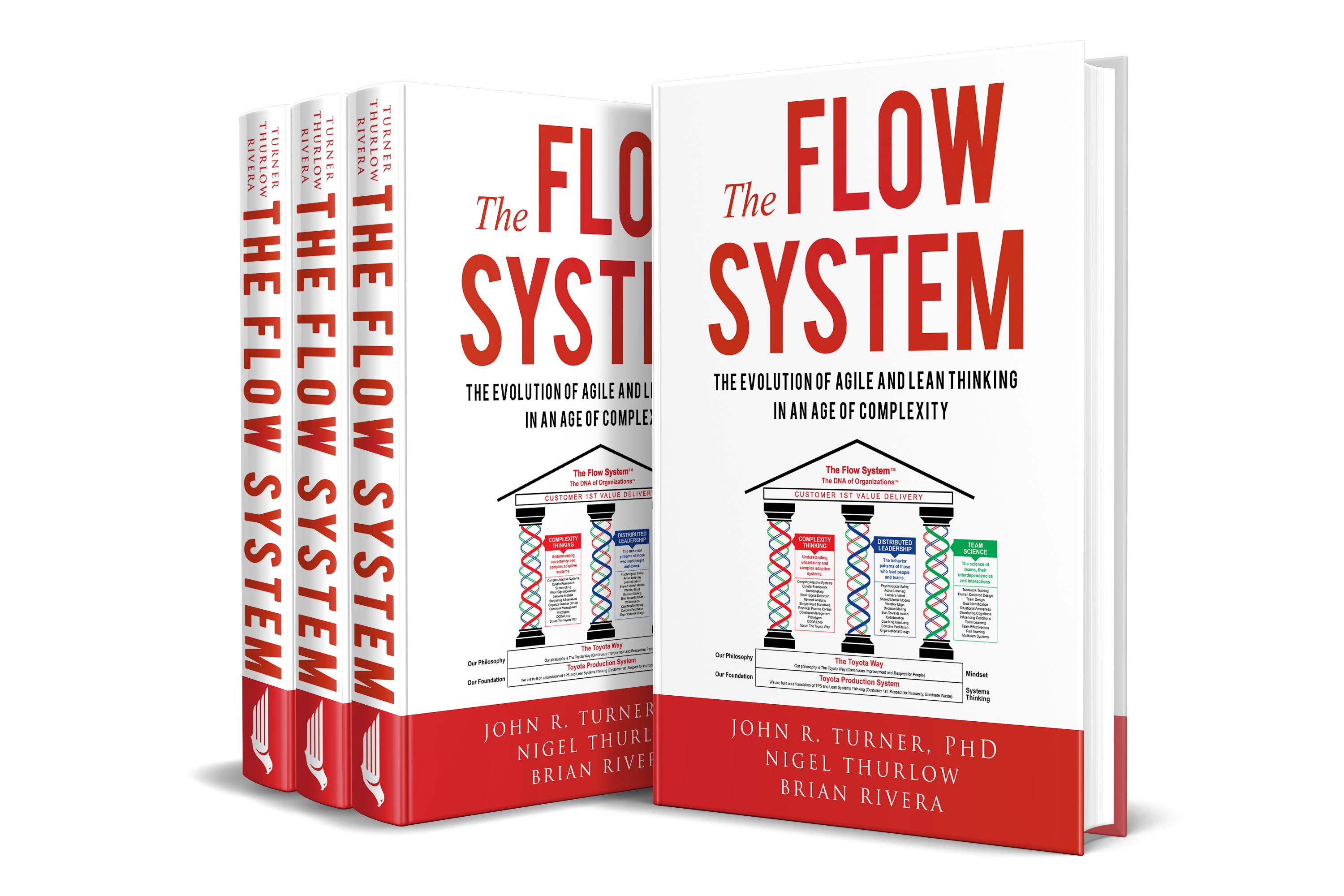
Levin’s insights on cells deepen this connection. His “cognitive light cone” theory seeks to formalize intelligence across diverse beings—biological and artificial—by mapping their goal-directedness. Developed to understand intelligences from apes and birds to synthetic beings, cyborgs, AI, colonial organisms, and even hypothetical extraterrestrials, it posits that cognition scales with planning horizon. Cells think, adapt, and learn, much like a high-performing team. The CK Theorem underscores their agency. The FEP aligns with the OODA Loop’s rhythm: predicting, planning, updating perceptions, and taking actions to shape the environment to match current Orientation—all to minimize surprise, stay far from equilibrium, and stave off entropy. (I learned this week that entropy is geometry and geometry is entropy—perhaps a topic for later discussion.) Boyd, who studied the Toyota Production System and was steeped in Mission Command, explained the OODA Loop as a fractal process, applicable from split-second decisions to long-term strategies. In The Flow System, we’ve drawn on Mission Command’s Leader’s Intent and Toyota’s decentralized problem-solving, where workers adjust in real time, akin to cells shaping tissues via bioelectric cues.
Fields and Levin suggest OOL isn’t a single spark but a pervasive emergence of agency—systems persisting by anticipating and adapting. This evokes a cosmic OODA Loop: life as a fractal dance of intent and response, whether in a cell’s bioelectric signals or a team’s workflow. Boyd’s genius distilled this into a cycle mirroring the FEP’s Bayesian persistence—living systems, human or otherwise, looping through the perception-action cycle to endure. The cognitive light cone adds depth: the further the planning horizon, the richer the cognition—a fractal principle spanning Mission Command’s layered decisions and life’s enduring adaptability.
What do you think? Does the OODA Loop as a fractal abstraction of life’s persistence resonate with you? Could Boyd’s insights, paired with Levin’s cognitive light cone, enhance our understanding of Mission Command?