

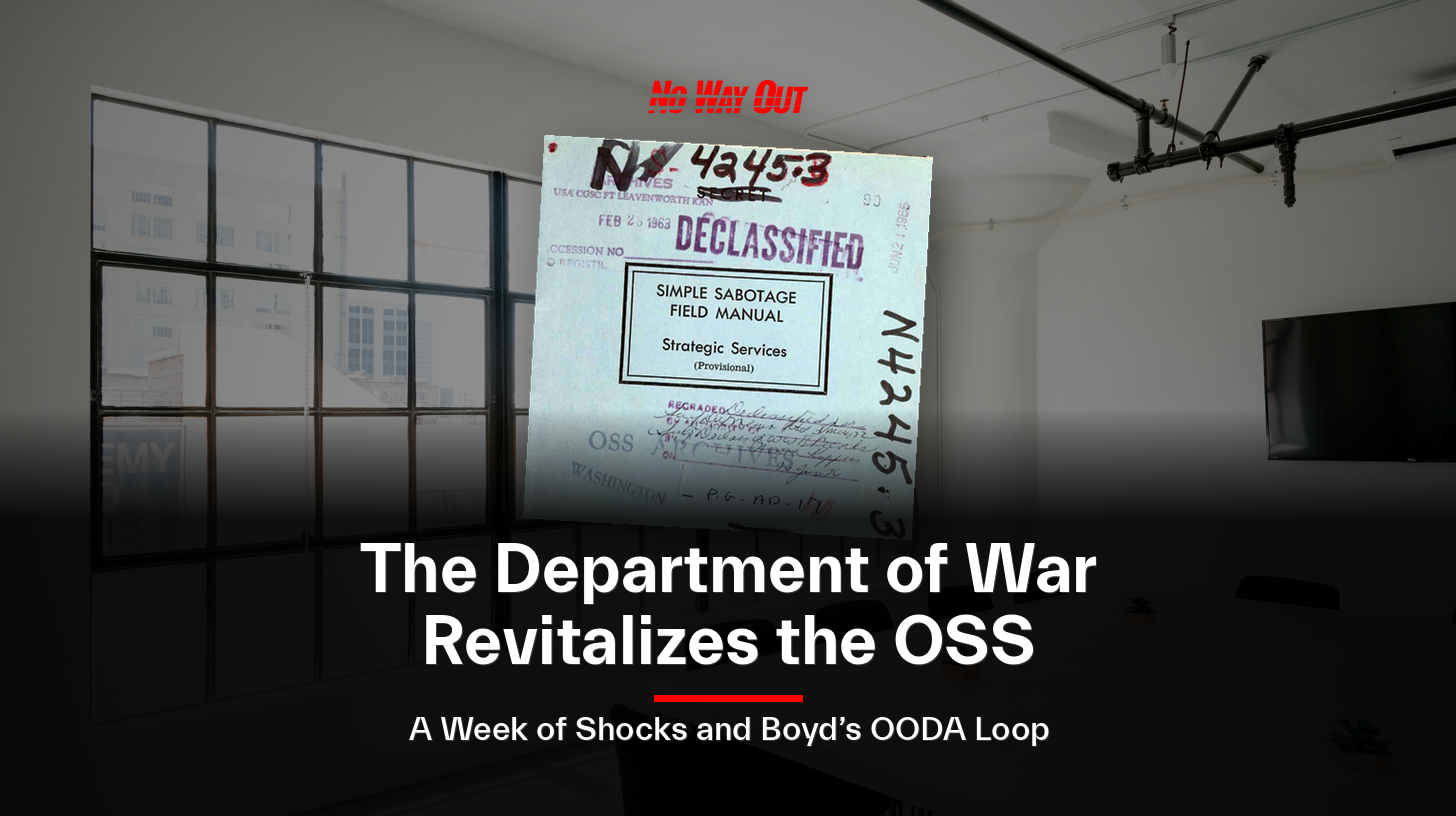
Ten years ago I wrote a short post about a 1944 government pamphlet called the Simple Sabotage Field Manual. The Office of Strategic Services, the wartime organization that came before the CIA, published it to teach ordinary people inside enemy factories, offices and rail yards how to slow everything down without getting caught.
This month the Department of War gave one of its special operations offices a secondary title: Office of Strategic Services. The name is back, so I went back to the manual. It reads even better in 2026 than it did in 2016.
A Week of Shocks
Organizations get knocked down from the outside, and they come apart from the inside. This week tested both. Microsoft 365 went down around the world, and Microsoft’s Charles Lamanna said there was “no indication this is the result of malicious or cyber activity.” NVIDIA announced that its CEO had resigned, effective immediately, and named an interim CEO.
Neither story needed a saboteur.
The Manual Every Company Lives…
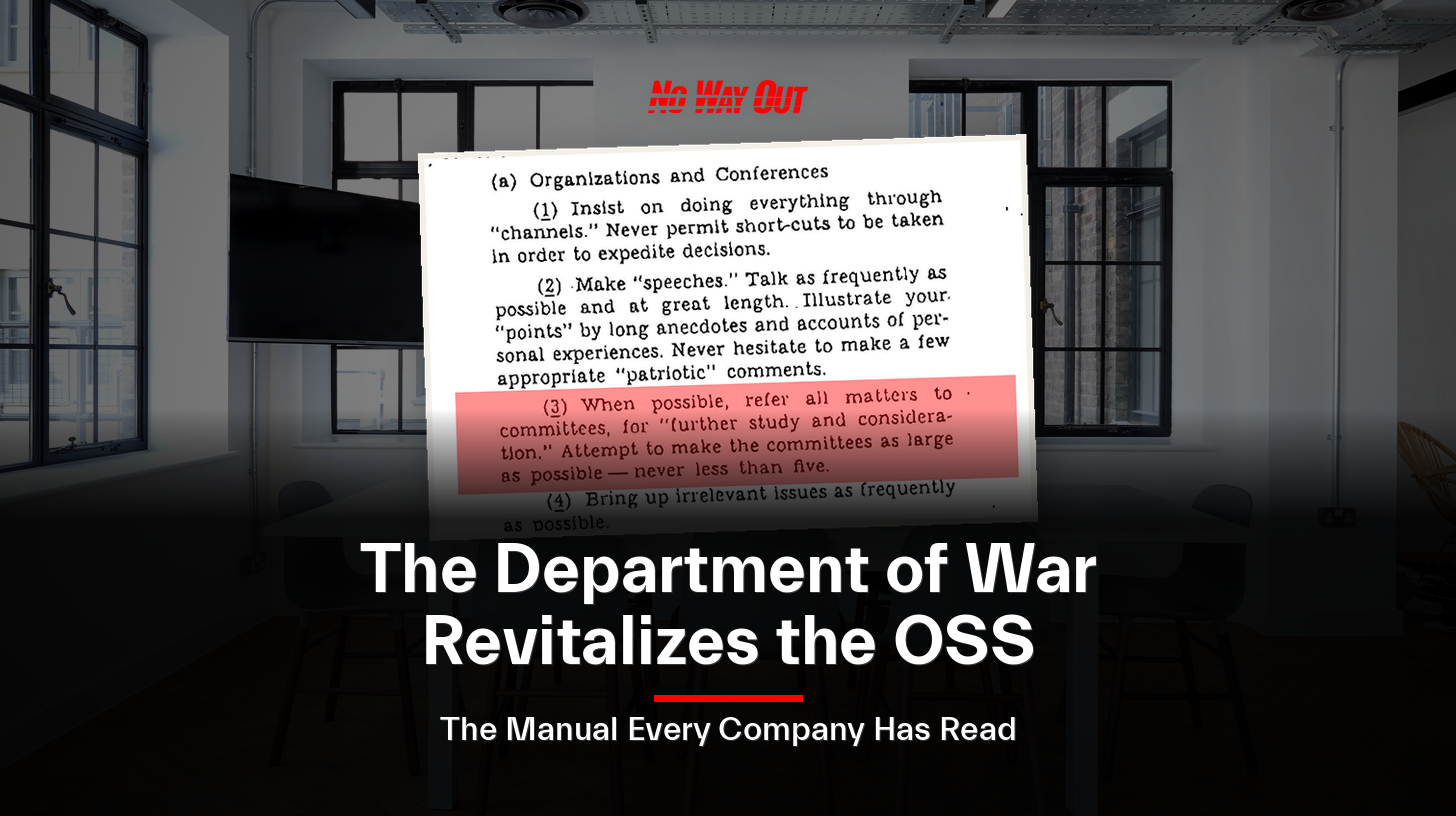
The section that matters is titled “General Interference with Organizations and Production.” It was written for someone already on the inside. Here is some of what it tells that person to do:
Insist on doing everything through “channels.” Never permit short-cuts to be taken in order to expedite decisions.
When possible, refer all matters to committees, for “further study and consideration.” Attempt to make the committees as large as possible — never less than five.
Haggle over precise wordings of communications, minutes, resolutions.
It also says, “See that three people have to approve everything where one would do.”
Every one of these looks like diligence. “Further study and consideration” should worry a leader most, because it sounds responsible. In a real meeting it comes out as “we need to think about this,” “let’s take another look,” “can we get more time.” On a large program, a product launch or a major exercise, that is how a decision that should take a day takes a quarter. Nobody gets blamed, because everyone was being careful.
The authors went after communication directly too. They told telegraph workers to delay and garble messages, and post office workers to make sure mail “is always delayed by one day or more, that it is put in wrong sacks, and so on.” In 1944 that meant wires and mailbags. In 2026 most companies run their whole conversation through one platform, and this week showed what happens when it stops. The real question is whether your people can still see, decide and act when it does, or whether they wait for the channel to come back.
Deception, Turned Inward
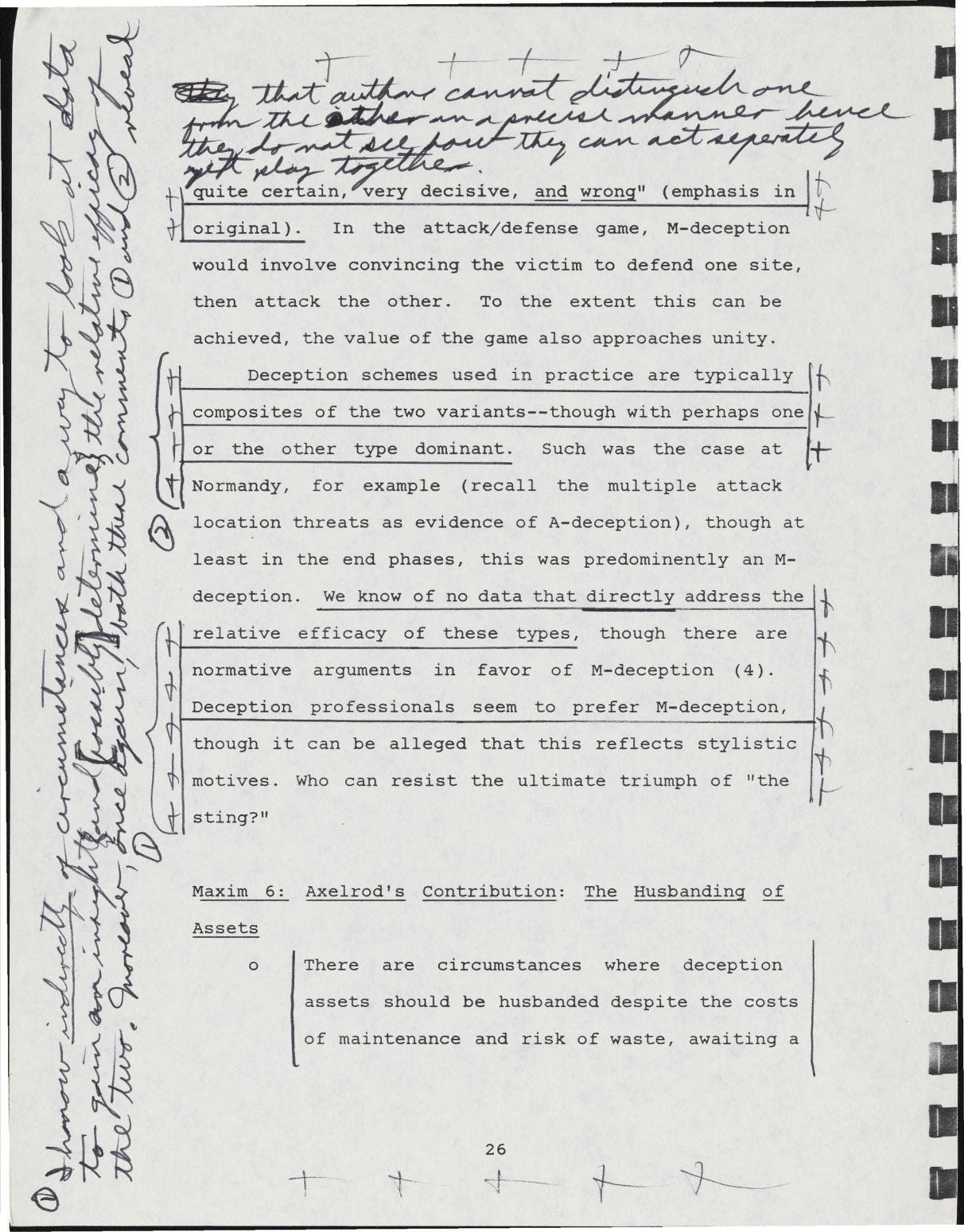
John Boyd, the fighter pilot and strategist behind the OODA loop, studied deception closely. In the margins of a CIA research paper, Deception Maxims: Fact and Folklore, he argued that its authors could not tell ambiguity from deception and missed how the two “act separately yet play together.”
Boyd aimed those tools at an adversary. Aim them at your own people and you get something every employee recognizes: a gap between what leadership says the organization is and how it actually runs. Boyd described what that gap produces. Friction, he wrote, “is generated and magnified by menace, ambiguity, deception, rapidity, uncertainty, mistrust, etc.” and “diminished by implicit understanding, trust, cooperation, simplicity, focus, etc.” The aim of moral conflict, in his words, is to “destroy moral bonds that permit an organic whole to exist.”
Read the sabotage manual again with that in mind. Every instruction breeds friction and mistrust, and every instruction passes for ordinary management.
Control Comes From the Outside
Boyd also read deeply on the Toyota Production System. In the margins of his copy of Masaaki Imai’s Kaizen, he wrote that “control is really exercised by the environment (customer).” Later in the same book he put it more bluntly: “outside-in-and-bottom-up not top-down-and-inside-out.”
The 1944 OSS Sabotage manual builds the opposite organization. Channels, committees and triple approvals point every decision up and inward, toward the people furthest from the customer. When Microsoft’s platform went down, millions of customers still had work to do. The teams that kept moving were the ones whose people could read the situation from the outside in and act on it from the bottom up.
How You Get Inside a Loop
This is where the manual stops being a historical curiosity. In the constraints-led approach, you design the conditions, and the conditions shape what a team can do. The OSS understood the dark side of that idea. Its manual is a guide to getting inside an organization’s OODA loop and changing its constraints from within.
“Insist on doing everything through channels” is a constraint, and a powerful one. It may be what complexity philosopher Alicia Juarrero calls a governing constraint, the kind that can “delimit the behavioral possibility space,” as she put it on No Way Out. Put enough of those restrictions on a company, from inside or outside, and it stops adapting. It stays busy. It holds meetings. It slows down, quietly, until a week like this one shows how slow it got.
The OSS name came back to Washington this month. The 1944 manual remains undefeated.